Pictured Rocks National Lakeshore · Munising to Grand Marais, Michigan

Pictured Rocks, without the confusion

Boat, kayak, hike, camp, or just drive? The park looks simple on Instagram and gets logistically weird in real life. This page settles the decision, then handles the parking, permits, fees, dogs, and bugs that trip people up.

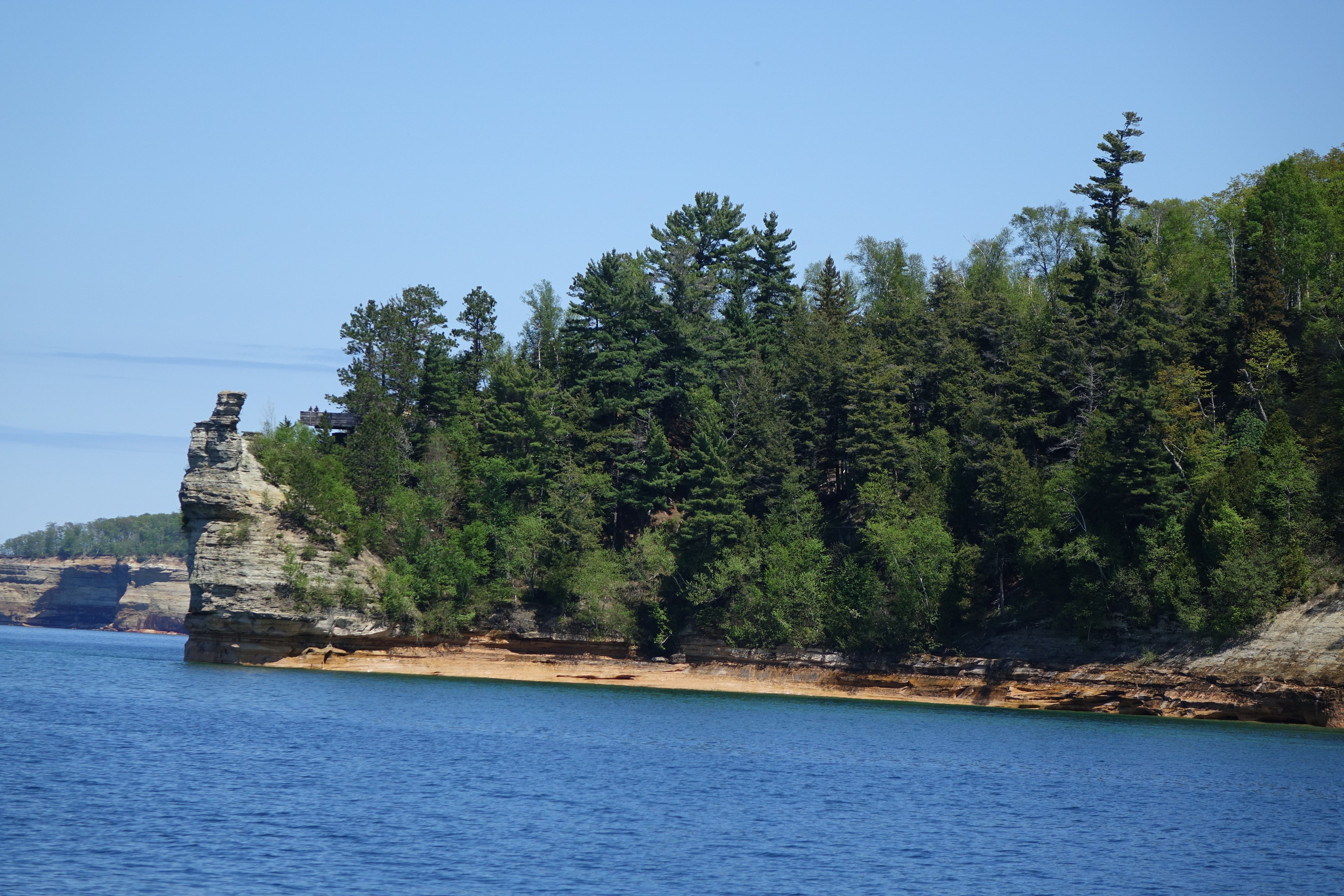
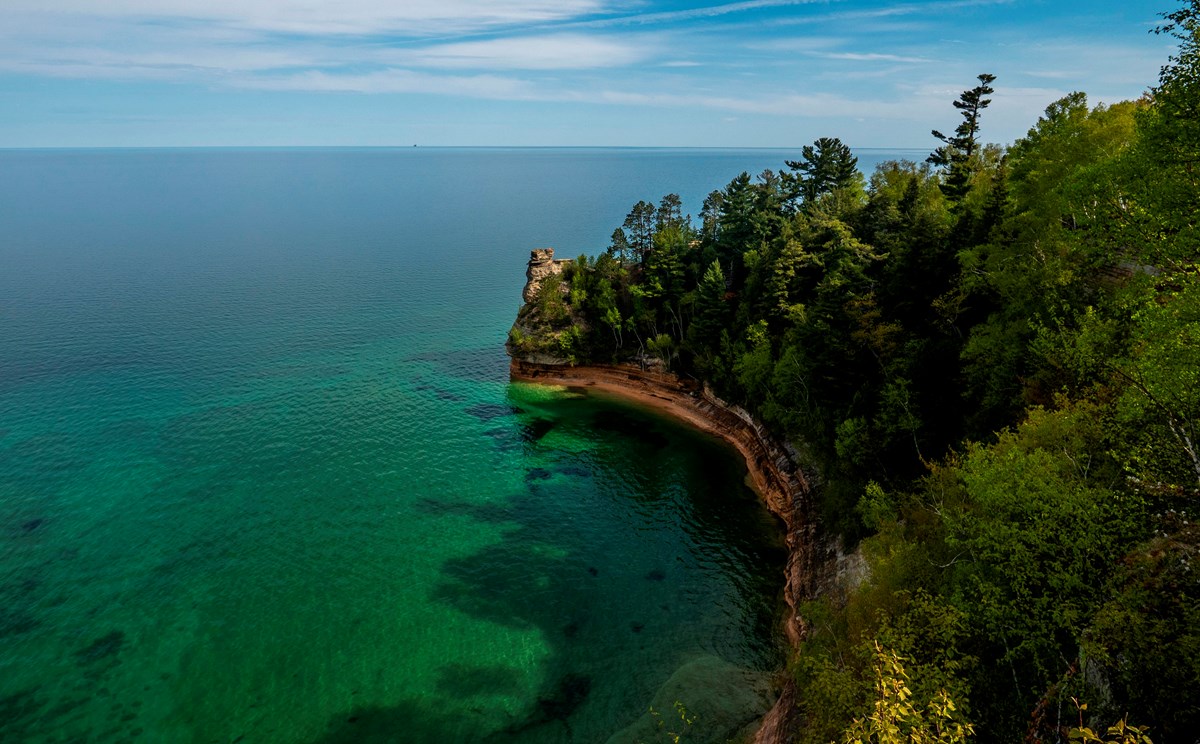
Here is the one fact that reorganizes every Pictured Rocks plan: this is a 42-mile shoreline park with almost no road access to its famous cliffs. Miners Castle is the only major cliff formation you can drive to. Everything else, the arches, the mineral-streaked walls, Chapel Rock, Spray Falls, takes a boat, a sea kayak, or your legs. Once you accept that, the trip plans itself. People planning this trip are not really asking whether it is beautiful. They already know. They are asking how to do it without botching the logistics.

Answer four questions, get a plan

This is the fork most visitors stall on. Pick the honest answers and the tool hands you the itinerary that fits.

1. How much time do you have at the park?
2. How far are you willing to walk?
3. How do you feel about the water?
4. Who is coming?

Boat vs. kayak vs. hike vs. drive

Four ways to see the same sandstone. They are not interchangeable, and none of them is the wrong answer. They trade time, effort, and cost against how much cliff you actually see.

The four modes, compared honestly
ModeTimeEffortWhat you seeRough costBest for
Boat cruise 2 to 3 hrs None. You sit. The full cliff run from the water: Miners Castle, Lovers Leap, Grand Portal, Chapel Rock, and Spray Falls on the longer route Roughly $45 to $65 per adult in recent seasons, verify when booking First visits, families, limited mobility, tight schedules
Guided kayak Half day Moderate paddling, several hours on the water Less total shoreline, but at water level, close beneath the walls and near the arches Roughly $150 to $200 per person, verify when booking Reasonably fit travelers who want the close-up memory
Chapel Loop hike 5 to 7 hrs Strenuous, about 10 miles More than 4 miles of clifftop walking, Chapel Rock, Grand Portal Point, two waterfalls, a beach Park entrance fee only Strong hikers, photographers, anyone allergic to crowds on boats
Drive-up circuit 2 to 4 hrs Short strolls, mostly under a mile Miners Castle overlooks, Miners Falls, Sable Falls, the Log Slide dune overlook, a beach or two Park entrance fee only Rainy days, non-hikers, dogs, a first taste with limited time

If you only pick one paid thing, pick the boat. The cruise covers every famous formation in one sitting and runs daily from mid May through mid October out of the Munising City Dock. Summer dates sell out, especially July and August, so book before you drive north. Late-day and sunset departures catch the warmest light on the north-facing walls.

The operator is Pictured Rocks Cruises, the authorized National Park Service concessionaire, running the Classic, Sunset, and Spray Falls routes since 1974. If Superior is too rough for the cliffs, the two-hour Glass Bottom Shipwreck Tour over the Bermuda and the Herman H. Hettler runs in sheltered Munising Bay and salvages the day.

Can you see the cliffs without a boat?

Yes, with an asterisk. From a vehicle, your cliff viewing is Miners Castle: paved paths, two overlook platforms, and a genuinely great view of the park's most famous formation. It is worth the stop every single time. It is also the end of the drive-up cliff list.

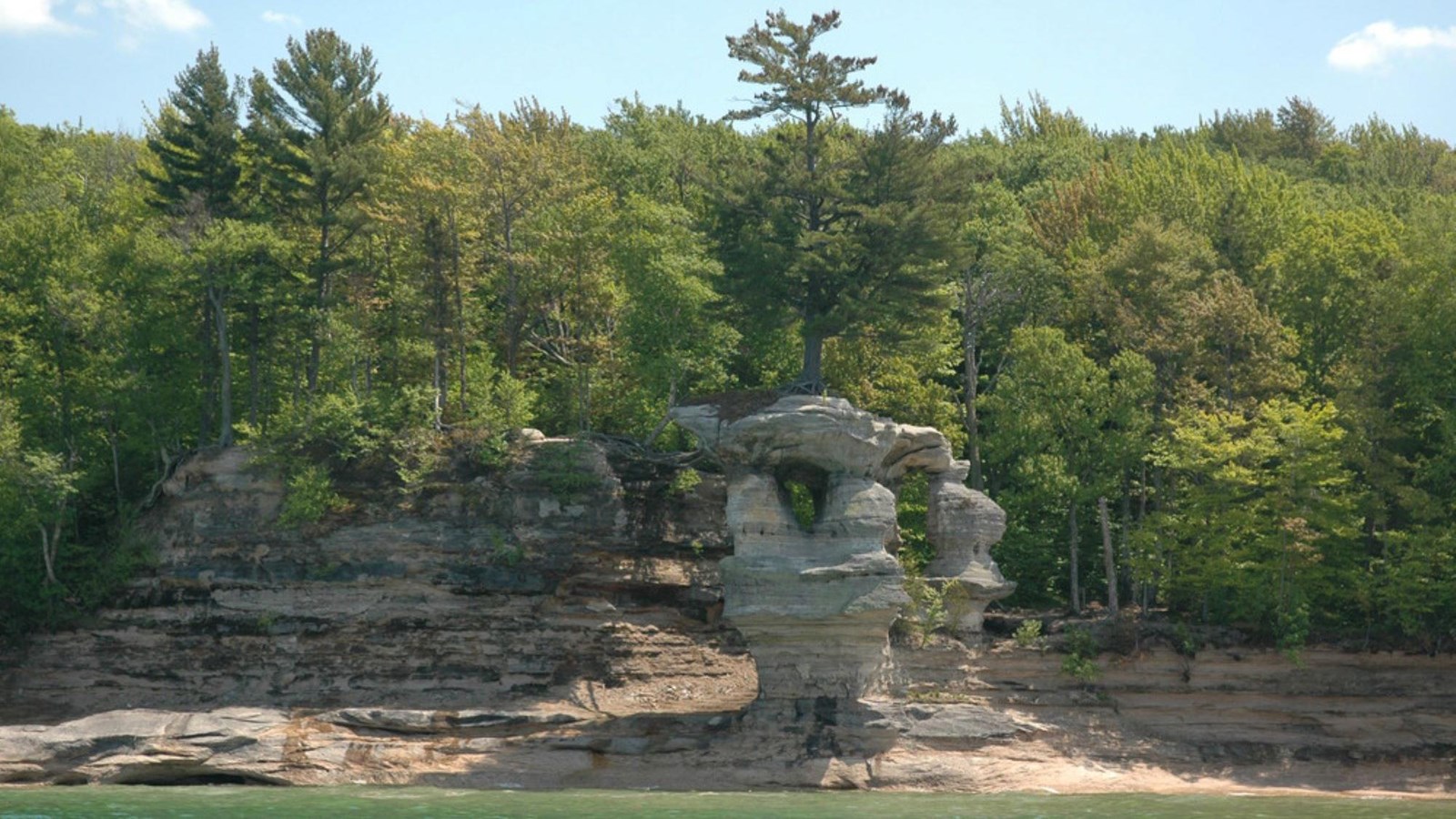
On foot, the math changes. The Chapel Loop puts you on top of the cliffs for miles. The shorter Chapel Falls and Chapel Beach out-and-back, about 6 miles round trip, earns you Chapel Rock and a clifftop beach without committing to the full loop. Mosquito Beach, about 4 miles round trip from the same trailhead area, reaches the shoreline with less elevation drama.

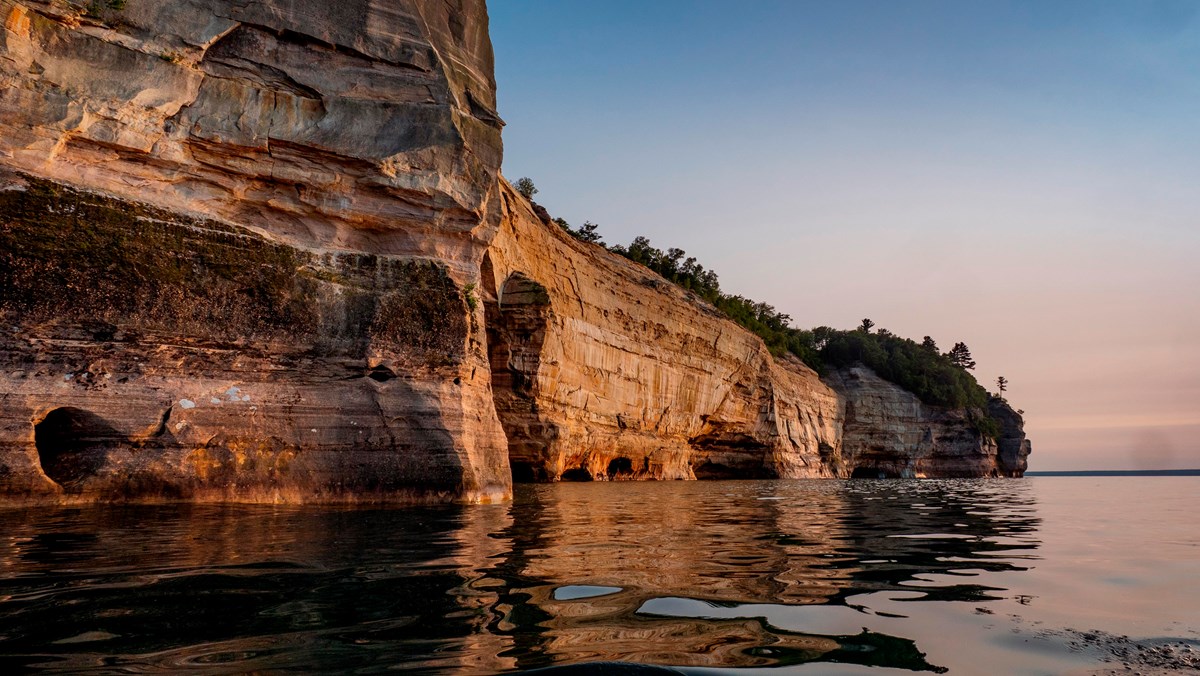
What land cannot give you: the water-level view of the mineral streaks, the arches from below, and Spray Falls, which pours straight into Lake Superior and is effectively boat-only. If those are the shots that brought you here, plan for the water.

Kayaking here is not a rental-kayak activity

Lake Superior is the piece people underestimate. The park service is blunt about it: kayaking here is dangerous, only experienced sea kayakers should attempt it on their own, and only sea kayaks belong on this water. Recreational kayaks, the sit-in ten-footers from the garage, are not appropriate on Superior. Conditions flip fast, the water stays cold enough to be a hazard all summer, and there are long stretches of cliff with nowhere to land.

The honest guidance: go guided. Outfitters in Munising run half-day trips with sea kayaks, gear, and guides who read the forecast for a living. Most launch near Miners Beach and paddle the cliffs toward Mosquito Beach and Grand Portal. Tours get rescheduled when the lake says no, which is a feature, not a flaw. Minimum ages vary by outfitter, often around 10 to 12, so check before booking a family trip.

Four established outfitters run the cliffs: Pictured Rocks Kayaking, the only one that ferries you out by boat and launches kayaks offshore so the boat shadows your group the whole way, Paddling Michigan, the Uncle Ducky outfit paddling from shore, Northern Waters Adventures, guiding here since 1991, and Yooper Yachts, which runs small groups and single kayaks. The Munising Visitors Bureau keeps the full list. Before any paddle day, check the wind and wave picture on the Great Lakes Buoy Dashboard and the park weather page.

If you are an experienced sea kayaker with your own boat, file your plan, watch the marine forecast, and treat the cliff stretch with the respect you would give any committing coastline.

Chapel Loop: the logistics, not the hype

The Chapel Loop is the best day hike in the park and one of the best in Michigan. It is also about 10 miles, with more than 4 of them along the clifftop, and it generates two predictable problems.

  • Parking. The Chapel Road trailhead lot fills fast on summer mornings. In July and August, arrive before roughly 8 a.m. or build a backup plan. Midweek and September mornings are friendlier.
  • Time. Budget 5 to 7 hours moving at a sightseeing pace. There is no water source you would want to drink from untreated, no shortcuts once committed, and the clifftop sections demand attention near unfenced edges.

Route notes: most hikers go counterclockwise, Chapel Falls first, then Chapel Beach and Chapel Rock, then the long clifftop run past Grand Portal Point, returning by Mosquito Falls. Dogs are not allowed on the loop. If 10 miles is too much, the Chapel Falls and Chapel Beach out-and-back delivers the two biggest highlights at about 6 miles round trip.

Easy stops for non-hikers

Plenty of the park works in street shoes. Chain these together for a satisfying half day of short walks, west to east:

  • Miners Castle overlooks. Paved paths from the parking lot. The signature drive-up view in the park.
  • Miners Falls. About 1.2 miles round trip on a wide path, with a staircase down to the viewing platform at the end.
  • Miners Beach. A short walk to a long sand beach beneath the start of the cliffs.
  • Sand Point. Shallow, relatively warm water near Munising. The easy family swim beach.
  • Log Slide overlook. A short walk to the lip of the Grand Sable Dunes, with a 300-foot drop to the lake and views toward the Au Sable Light. Going down the dune is easy. Coming back up is the workout people regret.
  • Sable Falls. Near Grand Marais. A staircase of 168 steps leads to the falls, so it is short but not step-free.
  • Au Sable Light Station. The exception that proves the rule: 1.5 miles each way on an old access road from the Hurricane River day-use area, flat and steady, past shipwreck timbers on the beach. The best effort-to-reward walk in the park that is not on a cliff.

Munising Falls is closed. The trail washed out in spring 2025 and the park is rebuilding it as an accessible, storm-resistant trail, with construction underway in 2026. The visitor center at the trailhead remains open. Details in current conditions.

The waterfall circuit, ranked by effort

Alger County drains to Superior over sandstone ledges everywhere, which is why locals treat waterfalls as the default rainy-day plan. Ranked from windshield to boots, per the county waterfall guide and the park waterfall page:

Alger Falls is a roadside glance at the M-28 and M-94 junction, thin by midsummer. Wagner Falls, a state scenic site two minutes farther down M-94, is the best return on effort in the county: a 0.2 mile boardwalk to a 20 foot cascade, leashed pets allowed, and a lot that gets plowed all winter, which is why local photographers shoot it in January. Horseshoe Falls in town is privately owned with an admission fee, and because it is spring fed it still runs when the others go dry. Tannery Falls is currently closed to the public. Munising Falls stays closed through 2026 for the trail rebuild.

Inside the lakeshore, Miners Falls is the workhorse: 1.2 miles round trip on a wide forest path to an observation deck over a 40 foot drop, and the most accessible park waterfall while Munising Falls is out. Chapel Falls and Mosquito Falls are hike-in falls off Chapel Road, the second one small but lovely in spring wildflower season. At the east end, Sable Falls trades 168 stairs for a falls-then-beach payoff, because the trail continues past the bottom step to the shoreline under the Grand Sable Dunes. Bridalveil Falls and Spray Falls belong to the boat and kayak crowd, since both pour off the cliffs into the lake.

What locals actually do

The tourist day is cruise, Miners Castle, Chapel Loop. The local day looks different. Sand Point Beach, once named a top five summer beach in America by The Weather Channel and just four miles from downtown Munising at the end of Sand Point Road, is the evening ritual: shallow Munising Bay water that runs warmer than anywhere else on the lakeshore, sunsets straight over Grand Island, picnic tables, and a Mobi mat in summer that carries wheelchairs from the lot to the water line. Walk the second beach at the road's end and you will see streaks of pink garnet sand washed out of the cliffs. Park headquarters sits out here too, with a small free boathouse museum from the Coast Guard station era, and the road is plowed all year.

Across the road, the half mile Sand Point Marsh Trail is the best short birding walk in the park, fully accessible, no dogs. Miners Beach is the swim-and-picnic beach on the west end, a short walk from its lot with the falls and the Castle minutes away. At the east end, the Sable Falls staircase doubles as beach access, and the town beaches at Grand Marais are the classic agate hunting grounds, with the Gitche Gumee Agate and History Museum in town to show you what you are looking for. Check current park rules before pocketing stones inside the lakeshore itself.

Two more habits worth copying. Campers who want a hot shower skip the rustic park campgrounds and book Woodland Park, the township campground right in Grand Marais. Twelvemile Beach itself, reached from the campground or the small Sullivan Creek day-use lot, is a dozen uninterrupted miles of sand that locals use for long walks and stargazing nights. And at the Log Slide, locals take the photo from the top: the dune drops 300 feet to the lake where loggers once chuted timber, and while you can run down in a minute, the climb back up is the most underestimated workout in the county.

Beyond the boundary

Grand Island sits half a mile off Munising, a national recreation area in the Hiawatha National Forest with its own sandstone cliffs, beaches, and campsites. The Grand Island Ferry runs daily in summer, and the island is best done by bike: mostly flat two-track, big water views, and a fraction of the mainland crowds. Munising outfitters and the ferry operator handle rentals and island logistics. Paddlers should know the Hiawatha Water Trail runs 120 miles from Big Bay around Grand Island and east to Grand Marais, with the Pictured Rocks cliffs as its centerpiece.

West of Munising toward Chatham, Laughing Whitefish Falls is the locals' pick for one more waterfall, a stairstep cascade down hundreds of sandstone ledges. And between Munising and Marquette, the Eben Ice Caves in the Rock River Canyon Wilderness draw the winter crowds, a mile hike to a cliff face of frozen seep water you can walk behind, with plowed parking on the private farm at the trailhead.

The east-end morning, done right

If you base a night in Grand Marais, run the east end as one clean loop before the day heats up. Start at the Hurricane River lower lot and walk the shoreline path out to the Au Sable Light Station, where the lake, the tower, and the empty beach do the work. Drive the few minutes up to the Log Slide overlook for the widescreen view of the dune face you just walked beneath, then finish at Sable Falls, down the 168 stairs and out the last stretch of trail to the beach under the Grand Sable Dunes. That is three of the best stops in the park on one short road, with no permits, no reservations, and no real climbing except the stairs back out.

By late morning you are back in a town that is exactly the right size for the rest of the day. The Gitche Gumee Agate and History Museum teaches you what a banded agate actually looks like, the town beach lets you test the lesson immediately, and the Pickle Barrel House Museum is the landmark photo you will not mistake for anywhere else. The Dream Bean bus pours espresso across from Woodland Park, dinner is the Dunes Saloon, and if the evening goes calm the harbor gives you the sunset. Locals save this circuit for the day the marine forecast looks shaky, because none of it depends on the lake behaving. One note for the tank: fuel up in either town first, since the stretch between them offers scenery and nothing else.

Munising or Grand Marais?

The park runs between two small towns about an hour apart on H-58, and choosing your base decides your mornings.

The two base camps
BaseCharacterClosest toPick it if
Munising The working hub. Most lodging, most restaurants, the boat cruise dock, the kayak outfitters Miners Castle, Miners Falls, Sand Point, Chapel Road trailheads You booked a cruise or kayak tour, want dining options, or are hiking Chapel Loop at dawn
Grand Marais Quiet harbor town, fewer services, more solitude Log Slide, Grand Sable Dunes, Sable Falls, Twelvemile Beach, Hurricane River and the Au Sable Light walk You want the eastern beaches and dunes without the drive, and quiet evenings over restaurant choice

The common play: base in Munising for the boat and the western trailheads, then give one full day to the east end, driving H-58 to the Log Slide, dunes, Sable Falls, and the lighthouse walk.

For lodging and town-level planning, the Munising Visitors Bureau covers the west end, the Alger County Chamber covers Munising, Grand Marais, and everything between, and UP Travel covers the wider peninsula.

Where to eat, and what a pasty is

The two local food groups are Lake Superior whitefish and the pasty, the Cornish miners' meat-and-rutabaga hand pie that came over with the 1800s mining workforce, pronounced pass-tee. Both towns keep current dining lists, and Explore Munising carries the wider county roster, but these are the reliable names.

Munising: Eh Burger does handmade burgers with a patio over the bay. Falling Rock Cafe and Bookstore pairs its own roasted coffee with locally caught smoked whitefish. The Dogpatch is the old-school institution, Tracey's at the Roam Inn is the dressy dinner, and Pictured Rocks Pizza has held the corner since 1989. For pasties it is Muldoons, baking since 1945, or Miners Pasty Kitchen downtown. ByGeorge Brewing pours next to the Driftwood Deli with a dog-friendly patio, East Channel Brewing pours near the water, Earl E Byrds handles breakfast, and VanLandschoot's fish market has sold the day's catch since 1914.

Grand Marais: the Dunes Saloon, home of Lake Superior Brewing, is the living room of the town, known for pizza and whitefish under a parquet ceiling. West Bay Diner is a genuine diner car hauled up from New York, the Grand Marais Tavern covers the bar-food lane, and the Dream Bean, a 1966 VW bus turned espresso stand, parks across from Woodland Park all summer.

Camping: what first-timers get wrong

Two assumptions break trips here. The first is that you can wing it. You cannot. All camping inside the lakeshore is by reservation, in designated sites only. There is no drop-in camping and no dispersed camping anywhere in the park. Show up without a reservation in July and you are driving back out to national forest land or a commercial campground.

The second is comfort. The three drive-in campgrounds, Little Beaver Lake, Twelvemile Beach, and Hurricane River, are rustic on purpose: no electrical hookups, no hot water, no showers. Twelvemile Beach in particular buys you a bluff over an enormous empty beach in exchange for those amenities, which is a good trade if you know you are making it. Drive-in sites are $25 a night, and all three campgrounds are open May 15 through October 15. Hurricane River has a bonus: the lower loop doubles as the trailhead for the Au Sable Light Station walk.

Backcountry permits

Backpackers and paddle campers need a backcountry permit year-round, tied to specific dates, specific sites, and party size. Permits release on a six-month rolling window through Recreation.gov, at $15 per reservation plus $5 per person per night, and the shoulder-season cliff-section sites go quickly. Decide your nightly campsites before you book, because the permit locks them in. The official backcountry map and mileage sheet is the planning document worth printing.

Fees, shuttles, and why your GPS lies

Entrance fees, 2026

  • $25 seven-day vehicle pass, covers everyone in the car
  • $20 seven-day motorcycle pass
  • $15 per person, seven days, for walk-in, bicycle, or boat-in visitors
  • $45 Pictured Rocks annual pass
  • America the Beautiful interagency passes are accepted, and kids 15 and under are free

The park is cashless. Buy online through Recreation.gov, at park headquarters, or from outfitters in Munising and Grand Marais. Every pass type is listed on the park fee page.

Shuttles

Point-to-point hikes on the North Country Trail create a car problem, and the park's advice is to schedule shuttle transportation before you arrive rather than improvising. The operator is ALTRAN, the Alger County transit authority, which runs the backpacker shuttle by advance prepaid reservation booked over the phone during business hours, and the park lists current options on its shuttle page. Sort it out from home, because cell service will not bail you out at the trailhead.

Navigation

The park service says it plainly: do not rely on GPS here. Routing apps invent roads, misplace trailheads, and lose signal across the H-58 corridor. Use the official park map, download offline maps before leaving town, and treat your phone as a camera once you pass the last gas station.

Bringing the dog

Partially dog-friendly is the accurate label. Leashed pets are welcome at the Twelvemile Beach and Hurricane River campgrounds, though not at Little Beaver Lake, and at several day-use areas, including the paved trails and overlooks at Miners Castle, which happens to be the best cliff view a dog can legally see here. Pets are not allowed on the Chapel Loop or most backcountry cliff trails, and the boat cruises take service animals only.

A workable dog day: Miners Castle overlooks, Sand Point beach time, the drive east with stops where the current rules allow. Check the park's pets page for the up-to-date list before you go, and plan boarding or a split schedule if the Chapel Loop or a kayak tour is on your list.

Two workarounds if the humans still want the water: Paddling Michigan offers free dog kennels at its check-in lot with an advance phone reservation, and dog-friendly pontoon tours of Grand Island run out of Munising, listed on the Visitors Bureau boat tour page.

The biting flies are real

Generic travel blogs bury this. The park service does not: stable flies can wreck a beach day, and they are worst on days with a south wind, which pushes them from the inland forests out to the shoreline where you are standing. They bite ankles, they ignore most repellent, and they peak in the mid-summer weeks.

  • Check the wind direction before committing to a beach afternoon. North winds off the lake are your friend.
  • Long pants and closed shoes beat spray for stable flies.
  • June also brings ordinary mosquitoes and black flies inland. September largely turns the bug problem off.

When to go

The park is open year-round, 24 hours a day, but the trip you are imagining runs on a shorter calendar. The boat cruises operate daily from mid May through mid October, and that window brackets the practical season for most visitors.

Mid May to mid June. Waterfalls at full volume, thin crowds, cold water, some services just waking up. Cruises begin mid May.
Late June through August. Warmest and busiest. Book cruises, kayak tours, lodging, and campsites weeks ahead. Watch south-wind days for stable flies.
September. The insider answer. Tours still run, bugs fade, crowds thin after Labor Day, and the lake is as warm as it gets.
Late September to mid October. Fall color over the cliffs, usually peaking in early to mid October. Cruises wind down mid October. Pack for real cold on the water.
Winter. The park stays open but many roads, including the Miners Castle road, go unplowed. Munising becomes an ice climbing town, and the shoreline turns into a different, harder trip that deserves its own planning.

Winter is a different park

The same porous sandstone that stripes the cliffs seeps groundwater all winter, and by late December it freezes into blue curtains and freestanding pillars that make Munising the ice climbing capital of the Midwest. Michigan Ice Fest, the largest and longest running festival of its kind, takes over town each February with beginner classes where all gear is supplied, and Down Wind Sports guides and rents equipment all season. The Curtains along Sand Point Road is the accessible showcase wall, Miners Falls freezes into a 40 foot column reached by a three mile ski or snowshoe, Grand Island adds thirty miles of cliff ice, and the Visitors Bureau winter page tracks conditions. Munising Falls is closed to climbing due to rockfall, and pets are not allowed at the climbing areas.

Non-climbers still win here. Wagner Falls is a plowed-lot, five minute snowshoe to a frozen cascade that local photographers treat as a January pilgrimage, the Sand Point road and vault toilet stay open all year, and the cross country and snowmobile networks radiate from town. The cruises and kayak tours shut down with the season, so winter is the one time the answer to boat versus kayak versus hike is simply boots.

Light, photography, and the night sky

The cliffs face north and northwest, which decides your whole photography day. Morning light rakes across Munising Bay and flatters Sand Point and Miners Castle, but the mineral streaks on the big walls do not ignite until late afternoon, which is why the sunset cruise departures book out first and why kayak guides love the evening water. On land, the two Miners Castle overlooks give the classic elevated angle a two minute walk from the car, and the Log Slide delivers the widescreen shot east along five miles of dune face to the Au Sable Light.

After dark, this is one of the darkest stretches of shoreline in Michigan. Twelvemile Beach is the local stargazing bench, an uninterrupted horizon of open lake with the campground right behind it, and any north-facing beach doubles as an aurora seat because the lake gives you a flat, light-free northern horizon. When a geomagnetic storm is in the forecast, the Northern Lights Michigan tool tracks the live Kp index and viewing odds for the Upper Peninsula. Sand Point works for aurora too, with the bonus that the road is plowed in winter when the strongest shows tend to arrive.

One legal note for the camera bag: drones are prohibited, as they are across the National Park System, so the aerial look comes from the overlooks, the boat, or a kayak seat.

Current conditions verified July 5, 2026

Munising Falls: closed. A roughly 75-foot section of the paved trail washed out in late April 2025, and the park moved straight into a full trail replacement that began in spring 2026, redesigned to be storm-resistant and wheelchair-accessible to the lower viewing platform. There is no safe access to the falls during construction. The Munising Falls Visitor Center at the trailhead remains open.

Conditions change here faster than blog posts do. Before you drive five hours for one specific waterfall or trailhead, check the park's current conditions page and the seasonal road status.

One good day, hour by hour

If you have a single day and no dog, this sequence covers the park's greatest hits without a 10-mile commitment:

  • 8:00 a.m. Miners Castle overlooks before the lot fills. Coffee-thermos quiet, best morning light on the formation.
  • 9:00 a.m. Miners Falls, 1.2 miles round trip.
  • 10:15 a.m. Miners Beach walk beneath the start of the cliffs.
  • 12:00 p.m. Lunch in Munising and pass pickup if you have not bought one.
  • Afternoon. Either the Chapel Falls and Chapel Beach out-and-back if your legs want 6 miles, or the drive east to the Log Slide and Sable Falls if they do not.
  • Late day. The boat. A late-afternoon or sunset cruise puts the warm light on the cliffs and ends the day on the single best experience the park sells.

With two days, split it: west end and the cruise on day one, then either the full Chapel Loop, a guided kayak morning, or the Grand Marais end with the Au Sable Light walk on day two.

Every verified link in one place

These are the official and operator pages this planner is built on. The paid pieces sell out in July and August, so book from home.

Official park pages

On the water

Camping and permits

Getting around

Local flavor, waterfalls, and winter

Towns and lodging

Water and weather before you go

The rough-weather day, hour by hour

Superior cancels plans without apologizing, so here is the day locals run when the lake is up or the rain is sideways. Morning: the waterfall circuit, Wagner and Alger first since they are minutes from town, then the Miners Falls walk, where the forest canopy takes most of the weather. Midday: a pasty from Muldoons or Miners Pasty Kitchen, eaten indoors without shame, then the free boathouse museum at Sand Point or the bookshelves at Falling Rock. Afternoon: the Glass Bottom Shipwreck Tour, which runs in the sheltered east channel between Munising and Grand Island when the open lake is unrideable, and puts you over two intact wrecks in water clear enough to read their deck lines. If even the bay is angry, the local etiquette page and the park conditions page will tell you what tomorrow looks like, and the Dunes Saloon in Grand Marais or East Channel Brewing in Munising will hold the table. The forecast discussion from NWS Marquette is the honest read on when the window reopens.

Quick answers

Can you see Pictured Rocks without a boat?

Yes, but with limits. Miners Castle is the only major cliff formation reachable by vehicle. Short walks reach Miners Falls, Sable Falls, the Log Slide overlook, and several beaches. The long run of cliffs, the arches, and Spray Falls require a boat cruise, a kayak, or the 10-mile Chapel Loop.

Is the boat tour or the kayak tour better?

The cruise covers the most shoreline in 2 to 3 hours with zero effort, the best single choice for most first visits, families, and limited mobility. A guided kayak covers less distance but puts you at water level under the cliffs, the more memorable pick if you are reasonably fit with a half day to spend.

Is kayaking Pictured Rocks safe for beginners?

Only with a guide. The park service calls Lake Superior kayaking dangerous, says only experienced paddlers should go independently, and allows that only sea kayaks belong out there. Guided tours supply the boats, gear, and judgment. Do not paddle the cliffs alone as a beginner.

How hard is the Chapel Loop and when should I arrive?

About 10 miles and 5 to 7 hours, with over 4 miles of clifftop. The lot fills early in summer, so arrive before roughly 8 a.m. in July and August. The 6-mile out-and-back to Chapel Falls and Chapel Beach is the shorter alternative. No dogs on the loop.

Should I stay in Munising or Grand Marais?

Munising for the cruise, kayak tours, restaurants, and western trailheads. Grand Marais for quiet and the eastern dunes, Sable Falls, and beaches. They sit about an hour apart on H-58, so many people base in Munising and drive east for one day.

Can you camp anywhere in the park?

No. Everything is reservation-only in designated sites, with no drop-in or dispersed camping. The three drive-in campgrounds are rustic, with no hookups, hot water, or showers. Backcountry sites need a permit reserved on a six-month rolling window.

How much does it cost to get in?

$25 for a seven-day vehicle pass covering everyone aboard, $20 for motorcycles, $15 per person for walk-in or boat-in, $45 for the annual pass. Interagency passes work, kids 15 and under are free, and the park is cashless.

Can I bring my dog?

Partly. Leashed pets are fine at Twelvemile Beach and Hurricane River campgrounds, not Little Beaver Lake, and at several day-use areas, including the paved Miners Castle overlooks. They are not allowed on the Chapel Loop or most cliff trails, and cruises take service animals only. Check the park's pets page for the current list.

When is the best time to visit?

Late August through September: tours still running, bugs fading, crowds thinning, warmest water of the year, with fall color arriving late September into mid October. Cruises run mid May through mid October overall.

Is Munising Falls open right now?

No. The trail washed out in April 2025 and stays closed while the park rebuilds it as an accessible, storm-resistant trail, with construction underway in 2026. The visitor center is open. Check current conditions before planning around it.

Can you swim at Pictured Rocks?

Yes, with expectations set. Sand Point Beach near Munising has shallow bay water that runs warmer than the open lakeshore, Miners Beach is the west end swim beach, and Twelvemile Beach offers miles of empty sand. Superior stays cold all summer and there are no lifeguards anywhere in the park.

Can I fly a drone for photos?

No. Launching or landing drones is prohibited in units of the National Park System, and the lakeshore is no exception. The cruise, the kayak seat, and the overlooks are the legal camera angles.

Can I hunt agates here?

The classic agate beaches are the town shorelines at Grand Marais, outside the park boundary, and the Gitche Gumee Agate and History Museum there will teach you what to look for. Check current park rules before collecting anything inside the lakeshore itself.

Is anything open in winter?

Plenty. The seeping cliffs freeze into world-class ice climbing, Michigan Ice Fest runs each February with beginner classes, Miners Falls becomes a 40 foot ice column reached by snowshoe, and the Eben Ice Caves are an easy mile hike nearby. The cruises and kayak tours are closed for the season.

About this page

Chris Izworski builds practical planning tools for Michigan outdoors trips from Bay City, on Saginaw Bay. Distances, rules, and fees on this page follow National Park Service guidance and were last verified July 5, 2026. Prices for commercial tours are approximate, so confirm with operators when booking.

More Michigan tools from the same desk: